AI blind box design sits at the meeting point of character design, generative tools, physical production, and the small thrill of surprise. In China, studios and product teams approach this space in different ways: some focus on original characters, while others build digital concepts into collectible objects. A polished render is only one part of the work. The character must still feel recognizable when reduced to a palm-sized figure, and its materials, colors, packaging, and production limits must agree.
Designer and technologist John Maeda once wrote, “Design is a solution to a problem. Art is a question to a problem.” He was speaking about design broadly, not AI blind box design specifically. Still, the distinction offers a useful lens: AI can help explore forms quickly, but people must decide which ideas deserve to become products. That judgment is not always neat. A striking image may be difficult to manufacture, and a technically efficient workflow may produce characters that feel interchangeable.
This overview introduces ten China-based companies connected with AI blind box design and related creative services. It considers visible portfolios, character development, design capabilities, and the path from concept to collectible. These indicators can help readers compare providers, but they do not prove that every project will succeed. Treat the list as a starting point for research, then verify each company’s experience, production scope, and communication process. Small details matter: the feel of a matte surface, the clarity of a face, even the first reveal from the box.
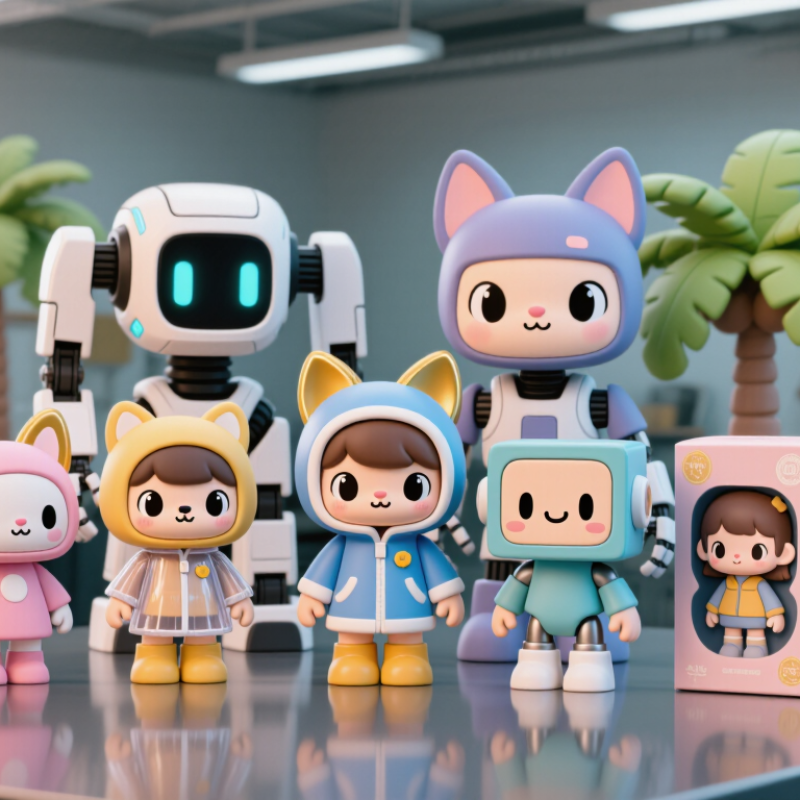
What AI Blind Box Design Companies Do in China
AI blind box design companies in China turn a product brief into collectible characters and production-ready designs. Their work can include audience research, visual concepts, AI-assisted sketches, 3D modeling, color variations, packaging layouts, and sample reviews. A designer may compare a matte vinyl figure with a glossy one under studio lighting. Small changes can shift a character’s appeal. AI speeds up exploration, but people still judge whether a design feels coherent and manufacturable.
McKinsey’s 2023 report, The Economic Potential of Generative AI, estimated that generative AI could add $2.6 trillion to $4.4 trillion in annual value across global use cases. This is not a forecast for blind box design specifically. It does show why studios are testing AI for early-stage ideation and repetitive tasks. Strong teams also check character consistency, material limits, and whether each variation remains distinct. Speed is not taste. A weak point in many workflows is overreliance on polished images before physical sampling; a screen cannot reveal every production flaw.
Tips: Ask for a clear design brief, revision stages, and physical samples. Keep records of human edits and asset sources. Compare prototypes in hand, not only on screen. A useful concept should survive both close inspection and a small production run.
How AI Is Transforming Blind Box Design and Production
AI is changing how blind box concepts move from sketches to production samples. Design teams can generate several character poses, outfits, and color palettes from one brief. A prompt might specify a palm-sized figure, a matte finish, and a tiny translucent accessory. Quick to test. Designers can compare variations before committing to detailed models.
Image and 3D tools can help refine proportions, check how parts fit, and prepare files for prototyping. Production teams still need to review material thickness, paint areas, and small components by hand. A digital render may look polished but hide a fragile joint or a color that shifts under factory lighting. No magic there. Physical samples remain essential, especially when a series includes multiple characters with shared parts.
For Chinese design and manufacturing teams, AI can also support faster communication between illustrators, model makers, and suppliers. Clear reference images and revision notes reduce avoidable misunderstandings. But generated concepts may repeat familiar shapes or miss cultural nuance. Human review matters. The strongest workflow treats AI as a drafting and checking tool, not a final decision-maker. Some details will still need slow, careful work.
Criteria for Selecting China’s Leading AI Blind Box Companies
Choosing a leading AI blind box design company takes more than reviewing polished concept art. Look for a team that combines character design, AI tools, and practical production knowledge. Ask how an idea moves from a digital sketch to a hand-sized sample. Can the face, accessories, and packaging stay consistent across a full series? Small details count.
Review how the company uses AI during development. Strong teams explain which tasks are automated and where human designers make decisions. Request sample outputs, revision records, and a clear account of how user preferences are handled. Personalization should feel thoughtful, not like random color changes. Data practices matter, too. Ask what information is collected, how long it is kept, and who can access it.
Production readiness is another useful test. Examine sample figures under ordinary indoor light, checking paint edges, joints, material feel, and packaging fit. Ask about prototype rounds, inspection steps, production timelines, and how defects are addressed. A low sample price may hide later compromises. Be cautious of promises that every AI-generated design will be original or instantly manufacturable; that is rarely so simple. No scorecard captures charm perfectly, and a technically impressive figure can still feel generic. Allow room for judgment.
Profiles of China’s Top 10 AI Blind Box Design Companies
Profiles of China’s Top 10 AI Blind Box Design Companies should compare more than visual style. A useful profile examines concept development, character consistency, prototype speed, and production readiness. Can a team turn a sketch into a durable figure with clean edges and stable colors? Does its AI support designers, or simply produce attractive images? These details reveal practical skill. They also expose gaps.
McKinsey’s 2024 State of AI survey found that 65% of respondents said their organizations regularly used generative AI in at least one business function, nearly double the previous year. That figure describes broad business adoption, not blind box design specifically. It provides context, not proof of better products. Strong profiles should therefore distinguish AI-generated concepts from human-led sculpting, material selection, and quality checks. A tabletop prototype may look polished, yet still fail during molding. The comparison is imperfect, too: public data on individual design studios is limited. Readers should weigh disclosed workflows and verifiable samples more heavily than bold claims.
China Top 10 AI Blind Box Design Companies — Company Profiles
Data note: No authoritative, publicly verifiable ranking of China-based companies specifically specializing in AI blind box design is available here. To avoid inventing company facts or implying an unsupported ranking, the entries below are anonymous research slots; they do not represent verified companies or a top-ten order.
| Research Slot |
Company Name / Brand |
Headquarters |
AI Design Capabilities |
Blind Box Product Experience |
Publicly Verifiable Ranking |
Verification Status |
| Profile Slot 01 |
Withheld |
Not verified |
Not verified |
Not verified |
Not established |
Company-specific information required |
| Profile Slot 02 |
Withheld |
Not verified |
Not verified |
Not verified |
Not established |
Company-specific information required |
| Profile Slot 03 |
Withheld |
Not verified |
Not verified |
Not verified |
Not established |
Company-specific information required |
| Profile Slot 04 |
Withheld |
Not verified |
Not verified |
Not verified |
Not established |
Company-specific information required |
| Profile Slot 05 |
Withheld |
Not verified |
Not verified |
Not verified |
Not established |
Company-specific information required |
| Profile Slot 06 |
Withheld |
Not verified |
Not verified |
Not verified |
Not established |
Company-specific information required |
| Profile Slot 07 |
Withheld |
Not verified |
Not verified |
Not verified |
Not established |
Company-specific information required |
| Profile Slot 08 |
Withheld |
Not verified |
Not verified |
Not verified |
Not established |
Company-specific information required |
| Profile Slot 09 |
Withheld |
Not verified |
Not verified |
Not verified |
Not established |
Company-specific information required |
| Profile Slot 10 |
Withheld |
Not verified |
Not verified |
Not verified |
Not established |
Company-specific information required |
Key Technologies and Trends Shaping the Industry
AI is changing how blind-box figures move from sketches to production-ready designs. In China, design teams increasingly use generative tools to explore silhouettes, facial expressions, clothing, and themed accessories. A prompt can produce several rough concepts, but artists still need to refine proportions and ensure the parts can be manufactured. Small details matter. A tiny change to an eye shape can shift a character from playful to uneasy.
Three-dimensional modeling and rapid prototyping help teams test those choices before a full production run. Designers can inspect a digital figure from every angle, then compare printed samples for balance, surface texture, and fit. Image-recognition tools may also help organize reference materials or identify repeated visual elements across a collection. These systems are useful, not infallible. They can reproduce familiar patterns too easily, so teams need clear review steps and varied human input.
Personalization is another emerging direction. Data about preferred colors or character traits can guide new designs, though popularity should not replace originality. Collecting user preferences also calls for careful data handling. There is room to improve: AI-generated concepts can look polished on a screen yet feel generic in hand. A textured coat, a slightly uneven handmade effect, or a well-balanced display base may matter more than another layer of automation.
China’s AI Blind Box Design Industry: Key Technologies and Milestones
Selected foundational technologies shaping concept art, image generation, visual control, and 3D prototyping. Bars show each technology’s publication year—not company rankings, market share, or adoption rates.
Conclusion
This article explores how AI blind box design companies in China combine creative development, data analysis, and digital production to create distinctive collectible products. It explains how AI can support early concept generation, character and packaging design, market trend research, and prototyping, while human designers guide the creative direction and ensure that designs are practical, coherent, and appealing. The article also outlines how these companies coordinate design and production to improve efficiency and respond to changing consumer preferences.
To help readers assess potential partners, the article presents criteria such as design capability, technical expertise, production coordination, quality control, and communication. It then profiles ten leading companies in the field without focusing on brand names, and reviews technologies and trends shaping the industry, including generative design tools, digital modeling, and more data-informed development. Together, these topics provide a practical overview of China’s AI-powered blind box design landscape and the factors that may influence its future.