As global buyers plan their 2026 assortments, AI designed toys are moving beyond novelty displays. They now combine interactive software, responsive sensors, adaptive learning, and personalized play. Yet innovation alone will not guarantee commercial success. Buyers need products that children can understand, parents can trust, and retailers can explain clearly.
This guide introduces ten promising AI designed toys for international sourcing and retail planning. The selection considers play value, age suitability, product durability, privacy practices, battery performance, packaging clarity, and after-sales support. It also examines practical details, such as voice recognition in noisy rooms, washable surfaces, charging time, and replacement parts. A talking companion may attract attention, but its microphone controls and data settings require careful review. An AI construction kit may inspire creativity, but confusing software can quickly reduce repeat use. Safety comes first.
Reliable buying decisions require more than impressive demonstrations at trade shows. Global buyers should request test reports, material declarations, software update policies, and clear instructions in relevant languages. They should also confirm compliance with applicable toy safety, electrical, privacy, and labeling requirements in each target market. The market is still uneven. Some product claims remain difficult to verify, and certain features may become outdated within months. That uncertainty matters. The strongest opportunities will likely come from toys that balance intelligent interaction with simple, durable design. These ten categories offer useful starting points, but buyers should test samples with real children and caregivers before placing large orders.
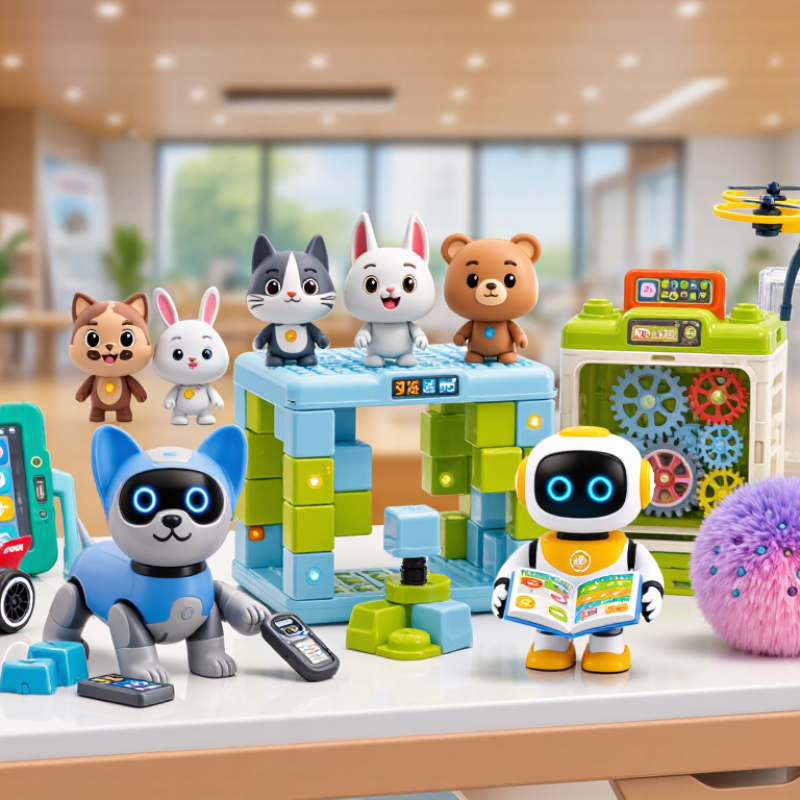
Top 10 AI Designed Toys Global Buyers Need in 2026
AI-designed toys are becoming more relevant because families want play that feels personal, responsive, and useful. Designers can study children’s common play patterns, then create toys that adjust difficulty, language, sound, or movement. A puzzle may offer easier clues after repeated mistakes. A learning companion may switch between English, Spanish, and Arabic. This flexibility helps retailers serve diverse markets without creating completely separate products. However, smart does not always mean better. Some toys still react too quickly, speak unnaturally, or distract children from imaginative play. Real user testing remains essential.
Global buyers also examine safety, privacy, durability, and after-sales support. Toys should use age-appropriate data practices and clear parental controls. Their materials must withstand drops, chewing, dust, and frequent cleaning. Buyers should request independent safety test reports and verify applicable requirements in each target market. They should also check whether software updates remain available after purchase. A beautifully designed toy becomes disappointing when its battery fails quickly or its core features depend on unstable connectivity.
Tips: Test prototypes with children from different language and cultural backgrounds. Measure response time, battery life, sound levels, and repair options. Ask whether the toy remains enjoyable without artificial intelligence. That question matters. Keep packaging instructions simple, and avoid promising developmental benefits without reliable evidence. Some design decisions will need revision after real homes expose problems that laboratories miss.
What Makes AI-Designed Toys Relevant to Global Buyers in 2026?
| Rank | AI-Designed Toy Category | Core AI Function | Primary Buyer Need | Recommended Age | Connectivity Model | Global Relevance in 2026 | Safety and Privacy Focus | Indicative Retail Range | Buyer Priority |
|---|---|---|---|---|---|---|---|---|---|
| 1 | Adaptive Learning Robots | Voice interaction, personalized learning paths, speech recognition, and progress adjustment. | Screen-free or low-screen educational play with measurable learning value. | 5–10 years | Optional Wi-Fi setup with offline core activities. | Supports multilingual learning and localized curriculum content. | Microphone controls, parental consent, encrypted accounts, volume limits, EN 71 and ASTM F963 testing. | US$60–150 | Very High |
| 2 | Generative Storytelling Plush Toys | Creates age-appropriate stories, remembers characters, and adapts narration to the child. | Comfort, imaginative play, and bedtime engagement without a handheld screen. | 3–8 years | Offline story library with optional app-based updates. | Easy to localize through multiple languages, accents, and cultural themes. | No open-ended unsupervised chat, washable materials, secure audio storage, choking-risk assessment. | US$35–90 | Very High |
| 3 | AI Coding and Robotics Construction Kits | Visual coding assistance, error detection, sensor feedback, and guided project generation. | Hands-on STEM learning and reusable project-based play. | 8–14 years | Bluetooth or USB connection; cloud features optional. | Matches demand for coding, engineering, and future-work skills across education markets. | Low-voltage components, battery protection, tool safety, moderated user content, firmware updates. | US$70–220 | High |
| 4 | AI-Powered Drawing and Music Boards | Recognizes sketches or melodies and converts them into animated scenes, sounds, or creative prompts. | Open-ended creativity with instant feedback and repeatable activities. | 4–12 years | Standalone device with optional tablet export. | Works across language markets because visual and musical interaction is highly transferable. | Child-safe content filters, non-toxic surfaces, protected charging ports, limited data retention. | US$45–130 | High |
| 5 | Personalized Puzzle and Brain-Training Games | Adjusts difficulty using performance data and generates new logic, memory, and spatial challenges. | Replayable cognitive play for home, travel, and classroom use. | 6–14 years | Mostly offline with optional account synchronization. | Compact, language-flexible formats are suitable for mass retail and educational channels. | Transparent difficulty settings, no behavioral advertising, durable components, age grading. | US$20–75 | High |
| 6 | AI Language-Learning Companions | Pronunciation feedback, vocabulary practice, conversation simulation, and adaptive review. | Affordable language exposure for multilingual households and schools. | 6–15 years | App-assisted with downloadable offline lessons. | Multilingual functionality enables regional versions without changing the hardware platform. | Parental dashboards, child-data minimization, moderated responses, microphone permission controls. | US$40–120 | High |
| 7 | Emotion-Aware Social Play Figures | Uses simple voice or facial-expression cues to suggest cooperative games and emotional-learning activities. | Social-emotional learning and collaborative family play. | 5–10 years | Local processing preferred; cloud connection not required for basic play. | Addresses parental interest in empathy, communication, and well-being skills. | No medical or psychological claims, no biometric storage, clear consent indicators, inclusive testing. | US$45–110 | Medium–High |
| 8 | AI-Enhanced Building and Engineering Sets | Generates build suggestions, predicts structural weaknesses, and offers alternative designs. | Creative construction with engineering reasoning and extended play value. | 7–14 years | Mobile or web companion; physical play remains functional offline. | Combines traditional construction play with digital design skills valued by schools and families. | Secure accounts, age-appropriate content, material traceability, small-part warnings. | US$35–160 | Medium–High |
| 9 | AI-Personalized Active-Play Games | Tracks movement through simple sensors and adapts challenges to space, ability, and fitness level. | More physical activity and flexible indoor play in limited spaces. | 5–12 years | Local sensor hub with optional mobile scoring. | Fits global demand for active, family-oriented entertainment and reduced passive screen time. | Impact resistance, safe play-area guidance, accessibility options, minimal motion-data collection. | US$40–125 | Medium–High |
| 10 | Sustainable AI-Customized Craft Kits | Generates personalized craft templates, difficulty levels, and material-saving layouts. | Creative customization with lower material waste and repeat purchase potential. | 6–14 years | Web or app design tool; printed or physical kit works offline. | Supports sustainability expectations, personalization, and localized seasonal themes. | Recyclable or responsibly sourced materials, non-toxic adhesives, clear age guidance, safe cutting tools. | US$18–65 | Medium |
Top 10 AI Designed Toys Global Buyers Need in 2026?
How AI Is Transforming Toy Design, Play, and Personalization
AI is changing how toys respond to children, not merely how they look. Global buyers are watching ten practical categories: adaptive building kits, coding robots, personalized puzzles, sensory play tools, smart drawing boards, musical learning toys, story-making figures, science kits, cooperative games, and movement-based toys. These products can adjust difficulty, pace, sound, or visual feedback. A puzzle may offer fewer pieces after repeated mistakes. A music toy may slow its rhythm for beginners.
The strongest designs keep children active, curious, and in control. AI can generate new stories, modify building challenges, and suggest safe experiments. However, personalization should not depend on excessive data collection. Buyers should request clear privacy controls, offline functions, age-appropriate settings, and transparent data deletion. Independent safety testing remains essential. So do durable materials, stable software, and accurate age grading. A clever algorithm cannot repair a weak hinge.
AI still misreads context. Sometimes.
A child may need encouragement, not another difficulty adjustment. A voice system may misunderstand pronunciation, accents, or emotional cues. Product teams should test toys with diverse families and observe real play over time. Child-development specialists, educators, engineers, and safety professionals can identify problems that laboratory simulations miss. Experienced buyers should also examine repair options and software support periods. Some personalized features feel impressive during demonstrations but become repetitive within days. That weakness deserves honest testing before large-scale purchasing.
International buyers are watching AI-designed toy categories that combine play value with practical market needs. Adaptive STEM kits are a strong option. AI can generate modular bridges, gears, and coding challenges for different age levels. Designers still need to test grip size, assembly time, and learning difficulty with real children.
AI-designed storytelling toys form another growing category. They can create regional characters, adjustable voices, and multiple language settings. However, cultural translation needs human review. A grammatically correct story may still sound unnatural or insensitive.
Privacy also matters, especially when toys use microphones or connected features. Buyers should request clear data controls, offline functions, and age-appropriate safety documentation.
Creative art kits, sensory toys, and beginner robotics also offer international potential. AI can develop unusual textures, reusable patterns, and simple robot movement systems. These designs may reduce repetition during product development. Yet some generated concepts look exciting on screen and fail during physical testing. A robot may move too quickly. A sensory surface may feel uncomfortable. Experienced buyers should examine material quality, durability, cleaning needs, packaging space, and local safety requirements before placing large orders. Small pilot batches remain useful, even when the digital prototype appears perfect.
Global buyers are watching ten fast-growing categories: robot pets, talking dolls, adaptive puzzles, coding kits, drawing companions, language toys, STEM builders, AI board games, interactive books, and sensory learning devices.
Yet clever functions should never outrank safety. A toy needs clear age guidance, rounded edges, secure battery compartments, stable charging, and materials tested for harmful substances. Independent laboratory reports matter more than attractive product claims.
Privacy requires equal attention.
Buyers should check whether microphones or cameras can be disabled, whether the toy works offline, and where recordings are stored. Strong encryption, parental controls, limited data collection, and simple deletion tools are essential. Data retention should be explained in plain language. It should not require guesswork.
Quality appears in small details. Examine stitching, hinges, speaker volume, heat during charging, and resistance to repeated drops. Firmware updates should be secure and available for a defined period. Suppliers should provide traceable production records, user instructions, conformity documents, and testing evidence for each target market. Requirements differ across regions, so one certificate may not cover every destination.
No checklist catches every failure. I would request sample testing before placing a large order, especially when children’s voices, images, or personal profiles are involved. Some buyers may accept impressive software too quickly. That deserves reflection.
Global demand for AI toys is moving beyond novelty. Buyers now seek products that support learning, creativity, emotional expression, and safe family interaction. Voice responses, adaptive games, and simple vision features are becoming common expectations. Yet, useful design matters more than impressive demonstrations.
From product testing and supplier discussions, regional preferences remain clear. European buyers often examine privacy controls and repairability. North American retailers value educational functions and flexible content updates. Asian markets frequently favor language learning, robotics, and compact home use. A toy that understands several languages can reach more households, but poor translation quickly damages trust.
Safety must guide every opportunity. Buyers should check age grading, material testing, audio limits, data handling, and parental controls before placing large orders. Offline functions can reduce privacy concerns. Clear consent settings are essential. Some AI features still feel decorative. They may entertain children for one week, then collect dust. This weakness deserves honest testing.
Future opportunities may come from modular toys, classroom tools, accessible play, and products that grow with a child. Replaceable parts could reduce waste and support long-term value. However, advanced sensors may raise prices beyond many families’ budgets. Developers and buyers need to measure real engagement, not only technical performance. A small pilot market can reveal confusing instructions, cultural mismatches, and unexpected safety concerns before global expansion.
Global Market Trends and Future Opportunities for AI Toys
The chart ranks ten AI toy product directions by a normalized 2026 global buyer demand index from 0 to 100. The index combines publicly reported growth signals for educational technology, robotics, STEM learning, personalized content, child-safe voice interaction, and connected play. It is a category-level market indicator and does not represent sales from any company or brand.
Key opportunity: buyers are prioritizing safe, screen-light, personalized, and educational AI experiences that combine physical play with adaptive software.
They can adjust difficulty, language, sound, and movement. A puzzle may offer simpler clues after repeated mistakes. Personal play feels more useful.
Popular categories include robot pets, talking dolls, adaptive puzzles, coding kits, and drawing companions. Language toys and interactive books also show promise.
Check age guidance, rounded edges, secure battery compartments, and stable charging. Materials should resist chewing, drops, dust, and frequent cleaning. Request independent test reports.
Confirm whether microphones and cameras can be disabled. Check offline operation, recording storage, encryption, and deletion tools. Parental controls should be clear.
Buyers should test core play without AI features. A toy must remain enjoyable offline. Otherwise, the novelty may fade quickly.
Inspect stitching, hinges, speaker volume, charging heat, and drop resistance. Test battery life and response speed. Small defects become expensive later.
European buyers often focus on privacy and repairability. North American retailers may prefer learning functions and flexible updates. Asian markets often value language learning and compact designs.
Request production records, conformity documents, testing evidence, repair options, and update policies. Confirm requirements for every destination market. One certificate may not cover all regions.
Modular parts, classroom tools, accessible play, and replaceable components may create longer value. A small pilot can reveal confusing instructions and cultural mismatches.
Some respond too quickly or speak unnaturally. Others distract from imaginative play. I may be too optimistic about clever software. Real homes expose problems.
AI designed toys are becoming increasingly relevant to global buyers in 2026 as families seek more interactive, educational, and personalized play experiences. By combining adaptive software, responsive sensors, and creative design, these toys can adjust activities to a child’s interests, learning pace, and developmental needs. Key categories include intelligent learning companions, customizable construction sets, interactive storytelling toys, coding products, creative art systems, and connected role-play products. Together, they support imagination, problem-solving, communication, and independent learning while creating new opportunities for international markets.
However, successful purchasing decisions require more than attractive features. Buyers should carefully evaluate child safety, durable materials, age suitability, data privacy, offline functionality, product quality, and compliance with relevant regional standards. Transparent controls, secure software updates, responsible data practices, and reliable customer support are also essential. As technology becomes more accessible and families show greater interest in meaningful digital play, the global AI toy market is expected to grow through personalization, multilingual experiences, sustainable production, and designs that balance innovation with healthy, safe play.