0%

Choosing the right AI powered smart toys can feel exciting, but the global market is rarely simple. A bright robot may answer questions, follow movement, or adapt to a child’s play style. However, attractive features do not always mean lasting value. Buyers must examine age suitability, data practices, app requirements, battery performance, and after-sales support.

This guide introduces ten notable AI powered smart toys for international buyers. It looks beyond colorful packaging and impressive demonstrations. Each product deserves attention for its learning functions, voice interaction, sensors, durability, and ease of setup. A toy that works smoothly on a showroom table may struggle with weak Wi-Fi at home. That detail matters.

We also consider regional differences. Plug types, language support, software access, warranty coverage, and safety certifications can vary by destination. Parents and distributors should check current product information before ordering. Privacy controls deserve equal attention, especially when toys include microphones, cameras, or cloud-connected services. Small details matter.

The selection is practical, not absolute. No ranking can match every family, classroom, or retail market. Some toys may offer richer interaction but require frequent charging. Others may feel less advanced yet remain easier to maintain. That trade-off is easy to overlook. By comparing real-world usability with advertised intelligence, this overview aims to help buyers make informed, responsible decisions. Capabilities change quickly. So should our questions.
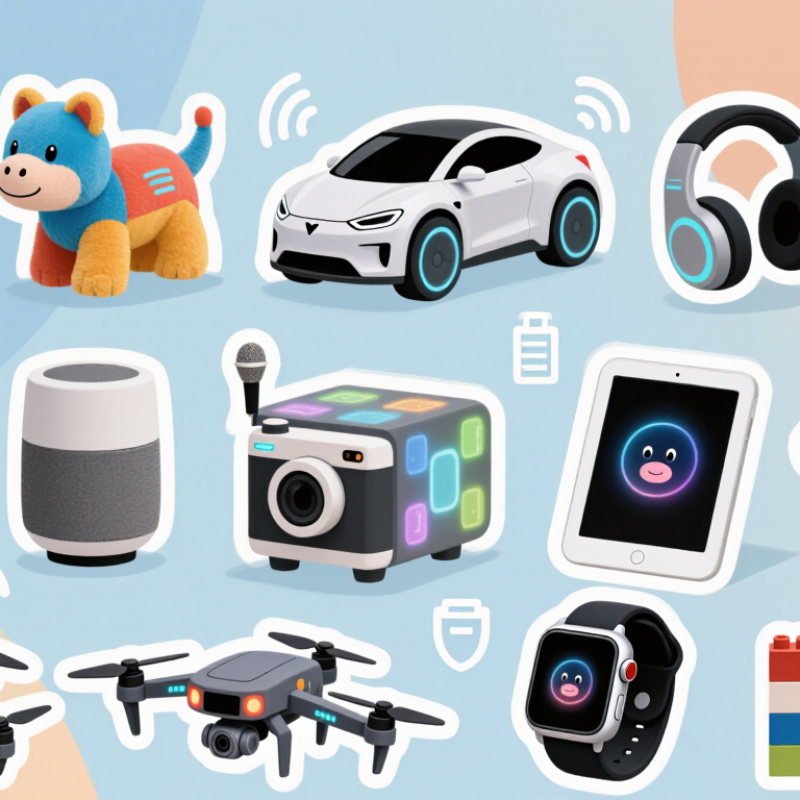
Top 10 AI Powered Smart Toys for Global Buyers?

What Defines an AI-Powered Smart Toy?

An AI-powered smart toy is more than a colorful object with an application. It combines sensors, software, and machine-learning models to interpret a child’s words, movements, or choices. It then adjusts its response. A toy that only plays fixed sounds is connected, but not truly intelligent.

The difference appears during play. A learning toy may slow a puzzle after repeated errors, change questions, or remember preferred stories. According to the Grand View Research smart toys report, the global market is projected to expand strongly through 2030, reflecting growing buyer interest in adaptive play. However, market growth does not prove educational value. That assumption needs testing.

Data access also defines the product. UNICEF and the International Telecommunication Union estimated that 2.2 billion children and young people lacked internet access at home. Therefore, buyers should ask whether core functions work offline. They should also check microphone controls, data deletion rules, encryption, and parental permissions. The NIST AI Risk Management Framework recommends examining validity, safety, privacy, and accountability across an AI system’s lifecycle. In practice, toy evaluations often miss these details. I have found that simple, visible controls build more trust than impressive technical language. The definition remains imperfect, because “adaptive” can describe genuine learning or merely scripted responses.

How the Top 10 AI Smart Toys Are Classified

Top 10 AI Powered Smart Toys for Global Buyers

How the Top 10 AI Smart Toys Are Classified

For global buyers, the top ten AI smart toys should be classified by real functions, not colorful packaging. I assess voice interaction, movement, learning ability, sensory feedback, and offline performance. Some toys answer questions, while others recognize objects or adjust games to a child’s progress. Educational value also matters. A toy should encourage creativity, problem-solving, or communication rather than provide endless noise.

Safety and reliability receive equal attention. I check age guidance, volume limits, washable materials, data handling, and parental controls. Toys using microphones, cameras, or internet services require closer review. Language support, charging systems, repair options, and regional electrical standards also affect global suitability. A useful scoring model gives weight to safety, learning value, durability, privacy, and ease of use. Marketing claims can still be exaggerated. That deserves careful reflection.

Tips: Compare the toy’s listed features with independent testing results. Test voice recognition in a noisy room. Check whether core activities work without internet access. Confirm language settings before ordering. Avoid toys with unclear data policies or missing age guidance. Small details matter. A strong classification also considers cultural fit, replacement parts, and customer support. These factors may seem less exciting, but they often determine whether a smart toy remains useful after several months.

Key Features, Functions, and Learning Capabilities

AI-powered smart toys are moving beyond lights and scripted sounds. Grand View Research estimates the global educational toy market could reach about USD 57 billion by 2030, with technology-led learning supporting this growth. For global buyers, the key question is practical value. Does the toy respond to a child’s voice, adjust difficulty, and encourage useful repetition? Strong products combine speech recognition, tactile sensors, adaptive puzzles, and multilingual support. A child might ask for a story, solve a shape challenge, then receive a gentler clue after an incorrect answer.

Learning quality depends on the feedback loop. Good toys explain mistakes instead of simply displaying scores. They can track vocabulary, counting accuracy, turn-taking, and problem-solving patterns through a parent-controlled dashboard. The 2023 UNESCO Global Education Monitoring Report warns that technology should support teachers and families, not replace human interaction. That principle matters at home. Screen-free voice play, physical movement, and cooperative tasks may offer better balance than constant visual stimulation.

Privacy also deserves close inspection. Buyers should check data minimization, offline functions, microphone controls, encrypted transfers, and clear deletion settings. Some learning claims remain difficult to verify. A toy may sound intelligent while repeating limited answers. Parents should test it with unfamiliar accents and age-appropriate questions. It may fail sometimes. That failure is revealing. Independent safety testing, transparent update policies, and evidence from child-development specialists make purchasing decisions more reliable than impressive demonstrations.

Safety, Privacy, and Age Suitability for Children

Top 10 AI-Powered Smart Toys for Global Buyers: Safety, Privacy, and Age Suitability

A top-ten shortlist should begin with safety, not clever voice features. The European Commission’s 2023 Safety Gate report recorded toys among the most frequently notified risky products, representing about 23% of alerts. Buyers should inspect seams, battery doors, magnets, charging parts, and small detachable pieces. A loose button can become a serious hazard within seconds. CPSC guidance also recommends matching toys with children’s developmental abilities, not only printed age labels. Age labels can feel too broad.

Privacy needs equal attention. UNICEF’s Policy Guidance on AI for Children stresses data protection, transparency, and child-centred design. Choose toys that explain microphone use, retention periods, and deletion controls in plain language. Avoid products that require continuous recording. NIST’s AI Risk Management Framework supports testing, monitoring, and clear accountability, useful questions for distributors and parents.

Who reviews inaccurate answers? Who receives the audio? Can the toy work offline?

For children under six, prefer limited conversations, physical controls, and no open-ended content. Older children may use adaptive learning features, but adults should test responses first. The American Academy of Pediatrics encourages media plans that protect sleep, movement, and family interaction. That matters here. A talking toy should not replace a caregiver, teacher, or quiet imaginative play.

I would also request independent test reports, software-support dates, and repair information before purchase. Some privacy policies remain difficult to read, and that is still a warning sign.

How Global Buyers Compare and Purchase Smart Toys

Global buyers often begin with a shortlist of ten AI-powered smart toys. The comparison should not stop at colorful screens or impressive voice demos. A useful review starts with age suitability, learning goals, response accuracy, battery life, and offline functions. Test the toy in a real room, not only in a supplier’s video.

Ask how the toy collects, stores, and deletes voice or image data. Check parental controls, encryption, software updates, and regional privacy requirements. Safety also matters. Review material reports, battery protection, charging design, and small-part risks. Request current test documents from recognized laboratories, then verify whether the reports match the exact model and factory. Paperwork can be incomplete.

Purchase decisions depend on more than unit price. Compare sample quality, minimum order quantity, tooling fees, lead time, packaging strength, and replacement support. A buyer in Europe may need different plugs, languages, and documentation than a buyer in South America or Southeast Asia. Confirm tariff codes and import rules with a qualified local advisor. Do not rely on one translation.

In my experience, a small pilot order reveals problems early. One toy may understand questions poorly in a noisy classroom. Another may need daily charging. These details affect returns and customer trust. I would score each model with the same checklist, while leaving space for human judgment. No scoring system is perfect. Recheck claims after software updates.

FAQS

How should buyers classify AI smart toys?

Judge real functions, not bright packaging. Check voice interaction, movement, sensors, learning, and offline performance. No shortlist is perfect.

What learning features are genuinely useful?

Look for adaptive puzzles, speech recognition, tactile feedback, and helpful hints. Good toys explain mistakes and adjust difficulty. Repeated sounds are not learning.

Can these toys work without internet access?

Check whether stories, games, and basic responses work offline. Test the toy after disconnecting Wi-Fi. Some advertised features may disappear.

What safety details should buyers inspect?

Check seams, battery doors, magnets, charging parts, and loose buttons. Small pieces can create serious risks within seconds. Follow developmental guidance carefully.

How can parents protect children’s privacy?

Review microphone use, data retention, deletion controls, and transfer security. Prefer limited recording and clear settings. Unclear policies deserve caution.

Are age labels enough for choosing a toy?

No. Match the toy with a child’s language, motor skills, attention, and emotional maturity. Printed ages can be too broad.

How should parents test voice and learning performance?

Try unfamiliar accents and age-appropriate questions. Test recognition in a noisy room. Record failures mentally, not just successful demonstrations.

What makes a smart toy suitable for global buyers?

Confirm language options, charging requirements, electrical standards, repair access, and replacement parts. Customer support matters after several months. I might overlook regional details.

Conclusion

This guide explores what makes AI powered smart toys different from traditional electronic toys, focusing on their ability to recognize voices, respond to questions, adapt to play patterns, and support interactive learning. It explains how the top ten products can be classified by age range, educational purpose, communication style, connectivity, and level of artificial intelligence. Readers will also learn how features such as language practice, storytelling, problem-solving activities, emotional interaction, and personalized feedback influence a toy’s learning value.

For global buyers, the guide highlights essential considerations including child safety, data privacy, parental controls, material quality, battery performance, software updates, and age suitability. It also explains how to compare products based on certifications, user support, packaging, shipping requirements, pricing, and supplier reliability. By combining educational benefits with responsible purchasing standards, buyers can make informed decisions and select smart toys that are engaging, secure, practical, and suitable for children in different markets.

Clara

Clara

Clara is a dedicated marketing professional with a strong understanding of the company’s products, customers, and market landscape. Through her practical experience and analytical approach, she transforms complex product information into clear, valuable, and engaging content for a wide range of......