Engineered Art Collectibles & Smart Interactive Plush Series
Explore our certified manufacturing matrix spanning edge-AI dialogue companions, multi-material rotocast vinyl dolls, and designer blind box figures manufactured under strict international quality thresholds.
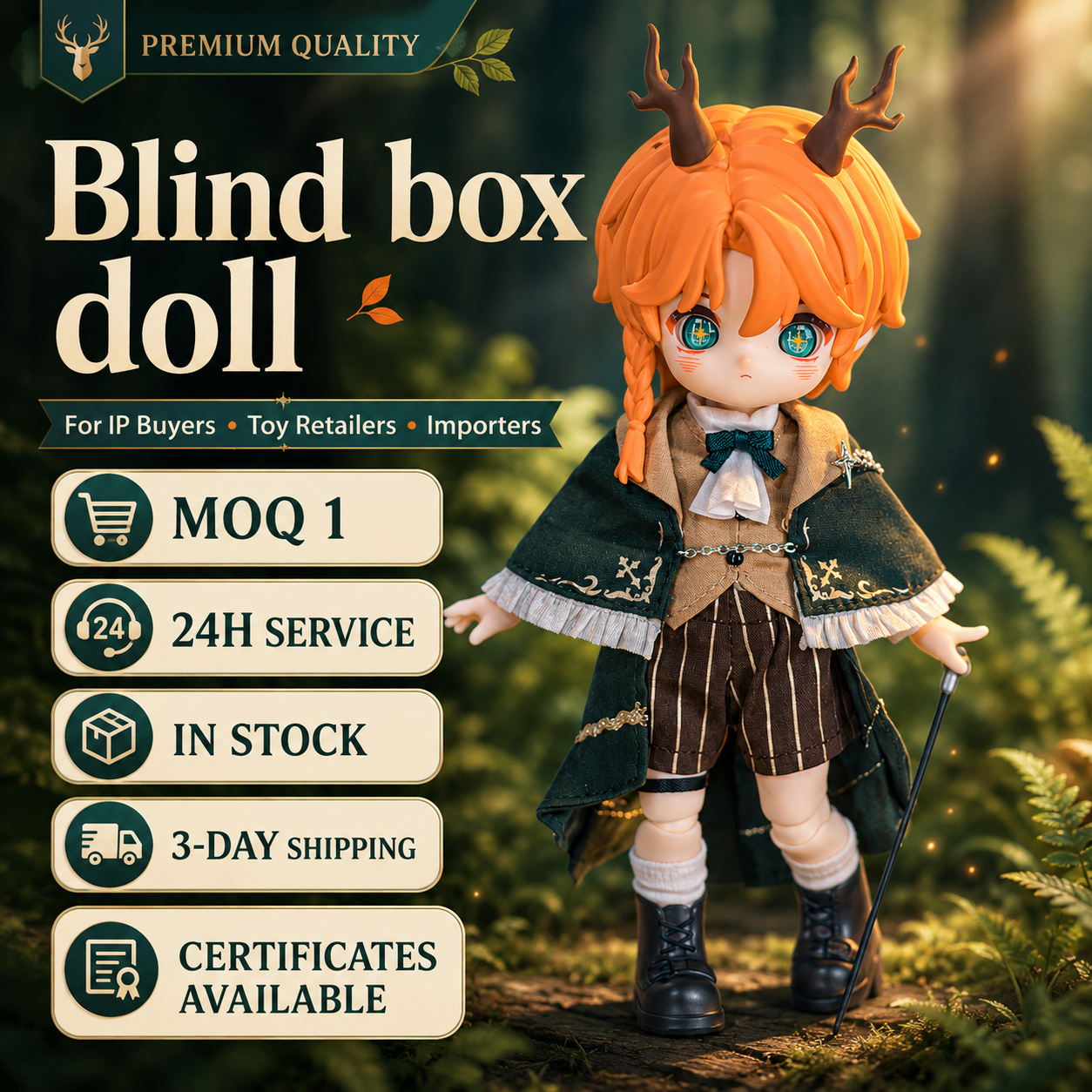
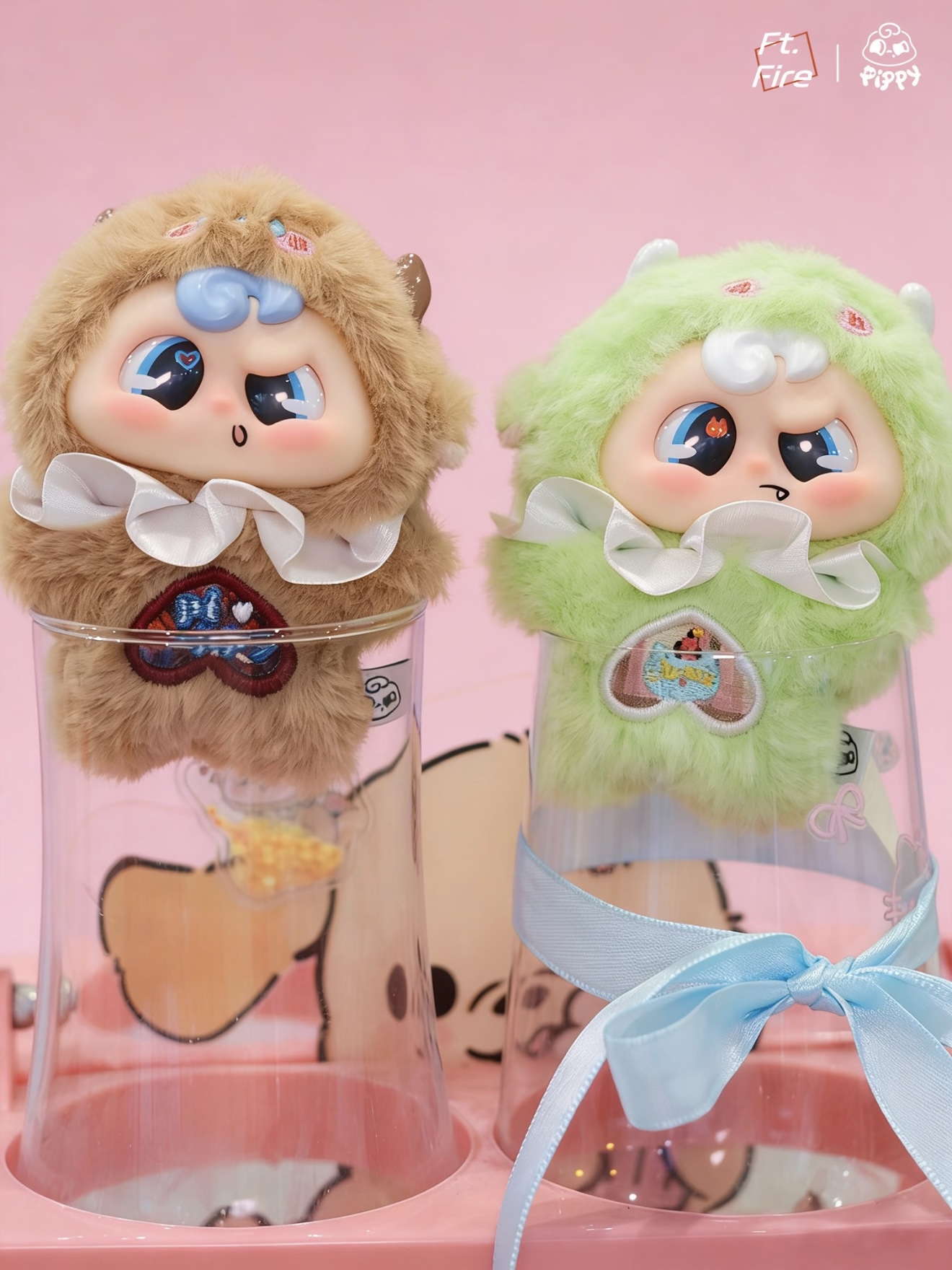
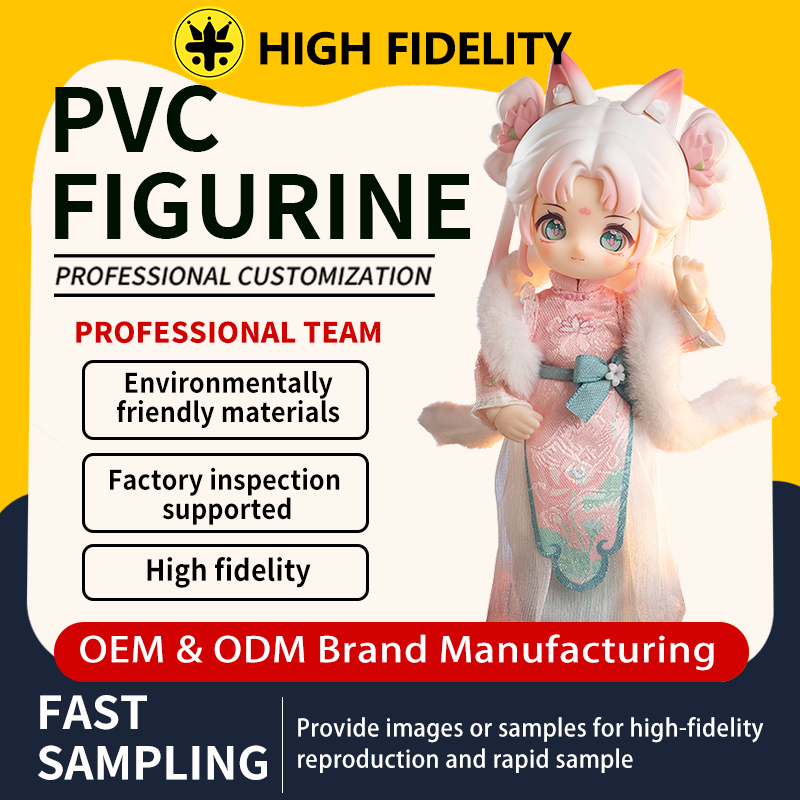
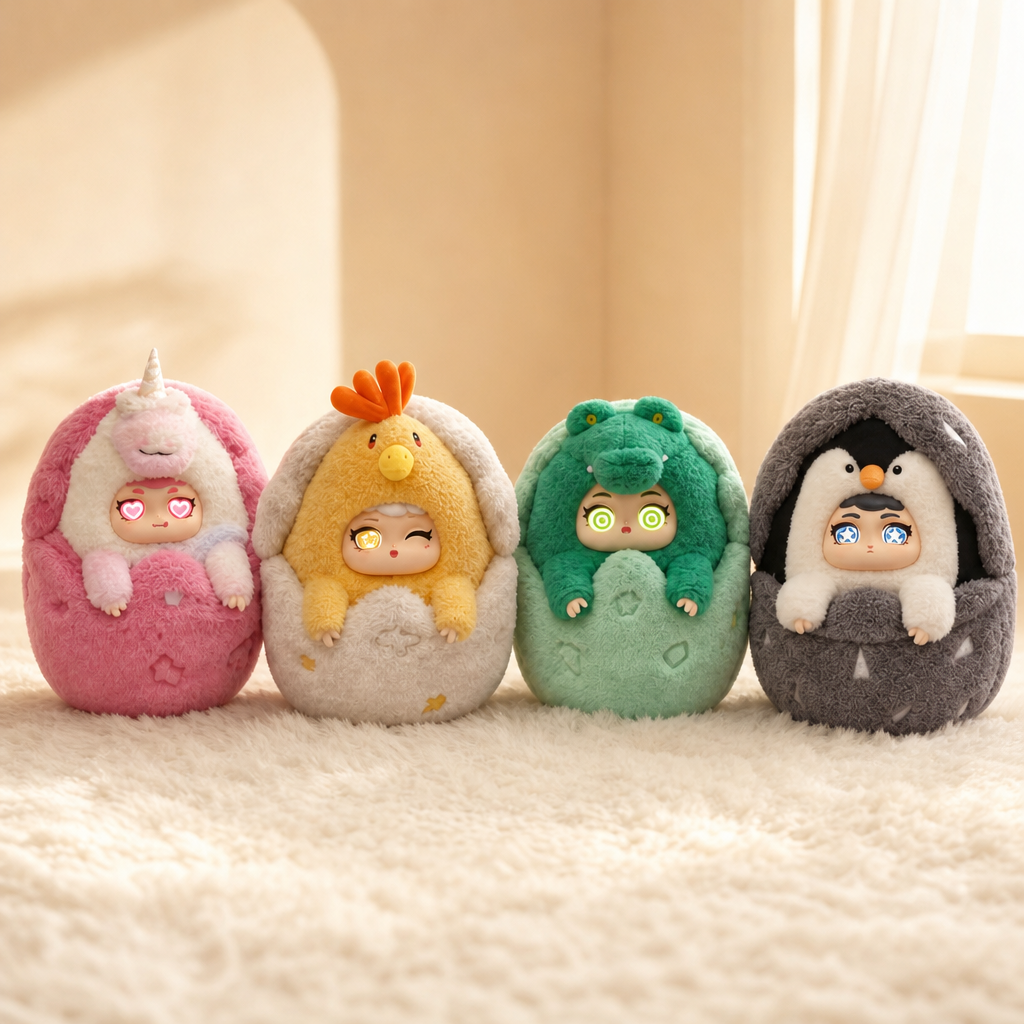
Procurement & Technological Evolution of Smart Interactive Plush
A technical overview for consumer hardware buyers, toy distributors, and IP brand directors navigating the transition from traditional plush to connected, intelligent emotional companions.
Edge Computing vs. Cloud Architecture
Global toy safety regulators require strict boundaries on cloud latency and user privacy. Modern smart plush designs split processing: local wake-word and low-power sensory reactions run on embedded microcontrollers, while complex Natural Language Processing (NLP) is routed through enterprise cloud pipelines with parental consent fencing.
- Low-power Wi-Fi/BLE 5.2 dual-mode chipsets
- Zero local voice logging for COPPA/GDPR conformity
- Over-The-Air (OTA) secure firmware payload updates
Multi-Material Hybrid Integration
The market is shifting away from purely synthetic plush towards vinyl-composite hybrids. By mating injection-molded ABS skull chassis and rotocast PVC faces with precision-stitched plush bodies, manufacturers can house sensitive mic arrays and battery cavities firmly while preserving tactile softness.
- Rotocast vinyl face caps with ultrasonic chassis anchoring
- Shock-isolated internal sub-enclosures for speaker modules
- Thermal dispersion pathways through breathable fabrics
Sustainability & Chemical Safety
Global procurement teams must meet rigorous non-toxic testing standards. Every compound in our toys, from rotomolding resins to seam stitching, is formulated to eliminate nonylphenol, lead, and phthalate compounds, protecting brand reputations before retail onboarding.
- Food-contact-grade ATBC plasticizer formulations
- Oeko-Tex Standard 100 Class I certified plush outer
- GRS-certified (Global Recycled Standard) PET fiber fill
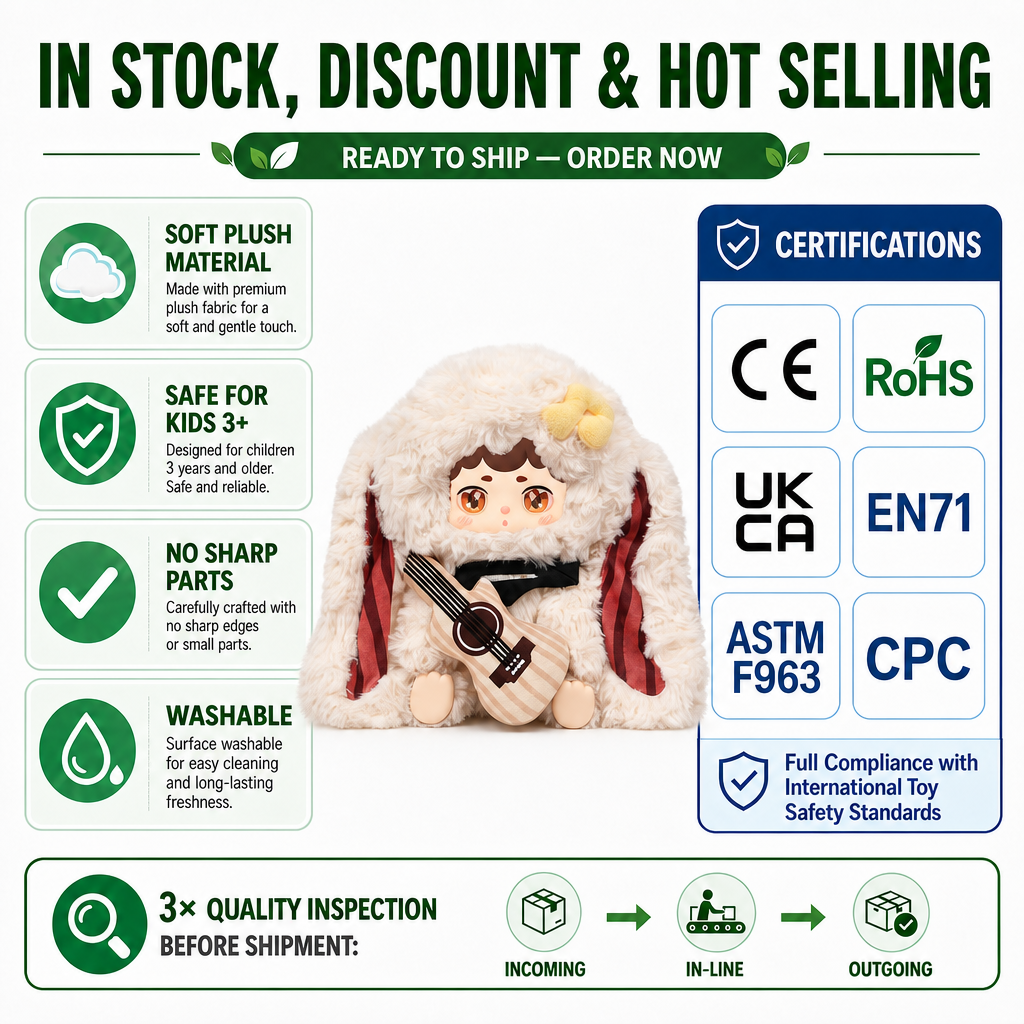
CE Certification Framework for Connected Smart Toys
Smart interactive plush falls across multiple European Union regulatory boundaries. We coordinate design and manufacturing protocols to meet all necessary compliance standards before shipment.
EN 71-1, 2, 3: Toy Safety
Mechanical drop testing, seam tension thresholds (minimum 70N pull force), drop-weight resistance on vinyl housings, flame spread inhibition, and toxic migration screening across 19 heavy metals.
Inspection: Third-party certified laboratory validation reports provided with every batch.
EN 62115 & RED Directive
Smart toys containing rechargeable lithium-polymer battery cells and wireless transceivers must satisfy EN 62115 (Electric Toy Safety) and Radio Equipment Directive 2014/53/EU (RED) for EMC and RF spectrum usage.
Battery: UN38.3, MSDS, and IEC 62133 certified power cells with dual-circuit protection.
RoHS 2.0 & REACH Compliance
All internal circuit boards, soldering connections, servo motors, touch sensors, and outer fabric skins pass quantitative chemical assays for restricted plasticizers, polycyclic aromatic hydrocarbons (PAHs), and azo dyes.
Traceability: Raw material traceability records archived for 5 years.
Enterprise Strengths: Shenzhen Tuck Technology Co., Ltd.
Operating under the Tuck Toys brand, our Shenzhen manufacturing facility links digital industrial design with scalable factory production for custom vinyl figures, blind boxes, and interactive plush toys.
Direct Shenzhen Factory
Our in-house capabilities span 3D sculpting, CNC mold-making, slush vinyl rotocasting, injection molding, pad printing, and dust-free plush assembly. Eliminating middlemen ensures cost predictability and swift prototype delivery.
Company Profile →Verified Trade Level
We maintain full financial transparency and export reliability, verified independently on international enterprise supplier directories. Importers can review verified transaction volumes, export ledgers, and buyer feedback.
View Credit Records →Strict IP Protection
We work with leading toy designers and global intellectual properties under binding non-disclosure agreements. Client CAD models, tooling molds, custom expressions, and production batches are kept strictly confidential.
Trade History →Flexible Pilot Batches
To support emerging designer toys, art toy galleries, and kickstarter brands, we offer low-MOQ pilot production runs, rapid SLA resin stereolithography, and custom master sample turnarounds within 10–14 working days.
Factory Capacity →Frequently Asked Questions on Sourcing Smart Plush & Blind Box Toys
Clear, direct technical guidance to help corporate buyers, sourcing agents, and brand managers plan production lead times and compliance requirements.
What is the standard MOQ for custom smart plush and vinyl figures?
Standard production runs typically begin at 1,000 to 2,000 units per design to optimize steel and copper tooling costs. However, for specialized smart interactive plush or pilot blind box series, we offer flexible prototype runs and staged volume production to validate target markets before full-scale manufacturing.
How do you test and verify CE and EN71 safety standards?
We work with ISO 17025 accredited third-party test laboratories, including SGS, TÜV, and Intertek. Every component—from vinyl plasticizers to internal lithium batteries and Bluetooth RF modules—is inspected under EN 71-1/2/3, EN 62115, and the EU Radio Equipment Directive (RED), with official test certificates issued before dispatch.
What is the typical production timeline from sketch to mass shipment?
Initial 3D digital sculpts are completed within 5 to 7 working days. Physical hand-painted prototypes require 7 to 10 days after 3D file sign-off. Mold tooling takes roughly 25 to 30 days, followed by mass assembly and final quality control, bringing total turnkey lead time to approximately 45 to 60 days depending on order complexity.
How do you protect proprietary character designs and tooling molds?
We execute formal, legally enforceable Non-Disclosure Agreements (NDAs) prior to artwork exchange. Client-funded tooling molds are tagged with unique identification numbers and kept exclusively for client-authorized purchase orders. We never sell, lease, or display proprietary customer designs without prior written permission.
Launch Your CE-Certified Smart Plush & Collectible Line
Connect directly with our engineering team in Shenzhen to review 3D files, review compliance frameworks, and receive a comprehensive bill-of-materials quotation within 24 hours.